
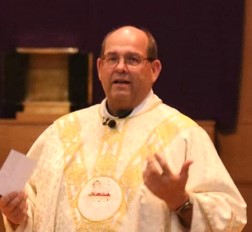
To my Dear St. John Neumann Family…
What does it mean to love God with all your heart, with all your being, with all your strength and with all your mind? Moses makes the same request of the people of Israel in the Book of Deuteronomy. He tells us it means keeping all of the commandments and statutes that are written in the book of the law. To do that we should use all that the Lord gave us to be obedient to him. In our weakness due to the concupiscence of original sin though, we find ourselves spilt between the will of God and our personal will. When they are in agreement everything is fine. When they are not in agreement we sin. At that point we often look for an excuse to justify our actions like Adam and Eve did when they committed the first sin. The Lord shows us how we are to love God in this way. In his love for us and his love for the Father, he surrendered his heart, being, strength and mind to the cross for our salvation. So as St. John tells us in his first letter, the love of God and love of neighbor are closely related. He says we can’t love the God we do not see if we don’t love the brother or sister that we do see. Therefore, the Gospel reminds us today of the two greatest commandments which summarize all ten.
Mi Querida Familia de San Juan Neumann…
¿Qué significa amar a Dios con todo tu corazón, con todo tu ser, con todas tus fuerzas y con toda tu mente? Moisés hace la misma petición al pueblo de Israel en el Libro de Deuteronomio. Nos dice que significa guardar todos los mandamientos y estatutos que están escritos en el libro de la ley. Para hacer eso debemos usar todo lo que el Señor nos dio para ser obedientes a él. Sin embargo, en nuestra debilidad debido a la concupiscencia del pecado original, nos encontramos divididos entre la voluntad de Dios y nuestra voluntad personal. Cuando están de acuerdo todo está bien. Cuando no están de acuerdo, pecamos. En ese punto, a menudo buscamos una excusa para justificar nuestras acciones como lo hicieron Adán y Eva cuando cometieron el primer pecado. El Señor nos muestra cómo debemos amar a Dios de esta manera. En su amor por nosotros y su amor por el Padre, entregó su corazón, ser, fuerza y mente a la cruz por nuestra salvación. Así pues, como nos dice San Juan en su primera carta, el amor a Dios y el amor al prójimo están cercamente relacionados. Dice que no podemos amar al Dios que no vemos si no amamos al hermano que sí vemos. Por eso, el Evangelio nos recuerda hoy los dos grandes mandamientos que resumen los diez.